 Digitalbino
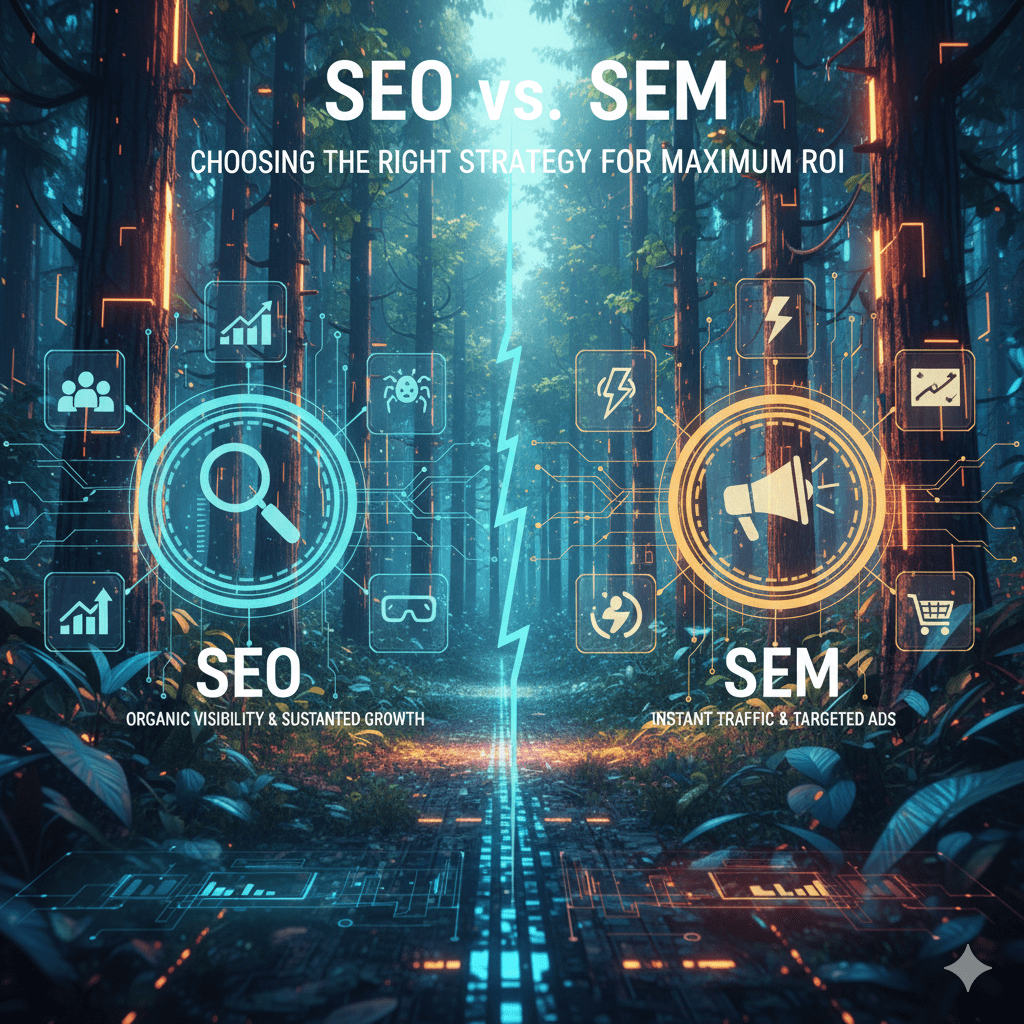
SEO vs. SEM: Choosing the Right Strategy for Maximum ROI
Introduction
When it comes to driving traffic and generating leads online, two powerhouse strategies dominate the conversation: Search Engine Optimization (SEO) and Search Engine Marketing (SEM). While both aim to put your brand in front of your target audience, they work very differently — and choosing the right one can make or break your ROI.
In this blog, we’ll break down SEO and SEM, compare their pros and cons, and help you decide which strategy (or combination) works best for your business in 2025.
1. Understanding SEO (Search Engine Optimization)
SEO is the process of optimizing your website and content to rank organically in search engines like Google.
Key Components of SEO:
-
On-Page SEO: Keyword optimization, meta descriptions, internal linking, content quality
-
Off-Page SEO: Backlink building, social signals, brand mentions
-
Technical SEO: Site speed, mobile-friendliness, structured data, crawlability
Pros:
-
Long-term, sustainable results
-
Builds brand authority and trust
-
Cost-effective compared to paid ads
Cons:
-
Takes time (3–6 months to see significant results)
-
Requires ongoing effort and updates
2. Understanding SEM (Search Engine Marketing)
SEM involves paid advertising, primarily through Google Ads, to show your brand at the top of search results instantly.
Key Components of SEM:
-
Keyword Bidding: Compete for ad placement on targeted search terms
-
Ad Copy & Extensions: Create compelling, clickable ads
-
Landing Page Optimization: Ensure pages are designed to convert traffic
Pros:
-
Instant visibility and traffic
-
Highly measurable and scalable
-
Ideal for testing offers and campaigns
Cons:
-
Costs can escalate quickly
-
Results stop when you stop paying
-
Requires ongoing budget and bid management
3. SEO vs. SEM: Which Is Right for You?
| Factor | SEO | SEM |
|---|---|---|
| Cost | Lower over time | Pay per click, ongoing cost |
| Speed | Slow (months) | Fast (hours/days) |
| Longevity | Long-term | Ends when budget stops |
| Best For | Authority, brand building | Lead generation, quick results |
| Measurement | Organic traffic, rankings | Click-through rate, conversions |
4. When to Choose SEO
-
If you want sustainable, compounding traffic over time
-
If your budget is limited but you can invest time and effort
-
If your goal is to build credibility and authority in your industry
5. When to Choose SEM
-
If you need leads quickly (e.g., new product launch, event promotions)
-
If you have a healthy budget for ongoing campaigns
-
If you want to test keywords and messaging before committing to SEO
6. The Power of Combining SEO and SEM
In 2025, the smartest marketers are not choosing either/or — they’re using both.
Example Strategy:
-
Use SEM to get quick wins and collect data on high-performing keywords.
-
Feed those insights into your SEO strategy to build long-term organic rankings.
Conclusion
SEO builds the foundation for long-term success, while SEM delivers fast results and actionable insights. The key is to align your choice with your business goals, budget, and timeline. Often, a hybrid strategy — where SEM gives you immediate traffic while SEO works in the background — is the best way to maximize ROI.